
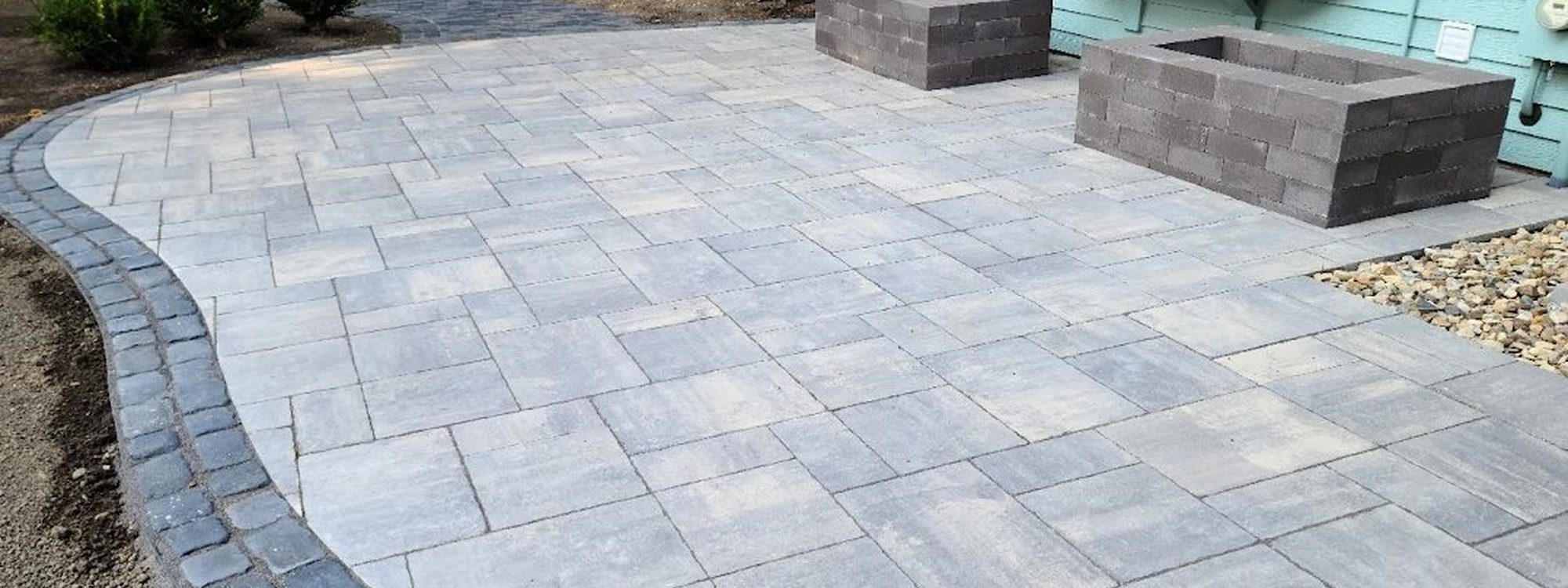
Not every tired-looking driveway or pool deck needs the same fix. Sometimes a simple reseal brings the color and protection right back. Other times, the pavers have settled, the joints have washed out, and the old sealer has failed in enough places that a reseal alone won't hold. Telling the difference matters, because sealing over the wrong problem just wastes the sealer.
What Paver Restoration Actually Covers
Restoration is the full refresh, and it's where cleaning, repair, re-sanding, and resealing come together into one process instead of four separate ones. It starts with an in-person inspection to spot settling, loose pavers, damaged joints, drainage issues, weed growth, efflorescence, and failing sand or sealer, then builds a plan that addresses all of it rather than just the surface. The result is faded, aged, and tired pavers brought back to life and protected for the long term, not just cleaned up for a few weeks.
Restoration vs. a Simple Reseal
Resealing on its own works well when the pavers themselves are structurally fine and the only real issue is worn-out or missing sealer. Restoration makes more sense once other problems have piled up alongside that fading. A quick way to think about it:
| What You're Seeing | Likely Better Fit |
|---|---|
| Faded color, but pavers are stable and joints look intact | Simple reseal |
| Fading plus a few loose or settled pavers in one area | Spot repair, then reseal |
| Fading, worn sand, settling, and drainage issues across a wide area | Full restoration |
| Old coating looks cloudy, blotchy, or is peeling in patches | Full restoration |
An in-person inspection is really the only reliable way to know which row applies to your driveway, pool deck, patio, or walkways, since fading and structural issues often show up together after a surface has gone a while without attention.
Signs Your Pavers Have Outgrown a Simple Reseal
- Pavers that feel loose or sit noticeably lower than the ones around them
- Joint sand that's washed out or missing across large sections
- Water that pools instead of draining after rain
- Old sealer that looks cloudy, blotchy, or is peeling rather than just dull
- Weeds or grass established in multiple joints, not just a spot or two
If you're seeing more than one of these across the surface, it's a reasonable sign that a reseal alone won't hold up, and it's worth having the whole area evaluated rather than patching the most visible spot.
What Happens During a Restoration
A restoration project follows the same order every time, because skipping a step undermines the ones that come after it. The surface is deep cleaned first, clearing old sealer residue, algae, and staining. Repairs come next: loose or settled pavers get re-set, damaged joints and edges get corrected, and drainage issues get addressed so water starts moving the right way again. Joint sand is replaced and compacted once the base is stable, giving the surface something solid to hold together. Only then does a professional-grade sealer go on, suited to Florida's sun, rain, and humidity.
Doing these steps out of order is exactly what causes restorations to fail early elsewhere. Sealing over loose pavers or washed-out joints just locks the underlying problem in place instead of fixing it, which is why restoration is treated as one connected process rather than a menu of add-ons.
How All Around Tampa Approaches Restoration
Every quote starts with an in-person look at the property, not a guess from photos or a drive-by estimate. From there, we walk through what the surface actually needs: whether it's a straightforward reseal, a spot repair, or a full restoration that brings cleaning, repair, re-sanding, and sealing together. If your pool deck or patio needs cleaning as part of the same project, we can fold that into the same visit rather than scheduling separate trips.
Why Restoration Timing Matters in Pinellas County
A restoration project depends on more than just repair and cleaning steps going in the right order. It also depends on weather. Repairs and cleaning can happen in most conditions, but the sealing step needs a reasonable stretch of dry, lower-humidity days to cure properly, which is easier to find in late spring than once daily summer storms set in across St. Petersburg, Clearwater, Palm Harbor, Safety Harbor, and Tarpon Springs.
That's part of why restoration projects that have been put off for a while tend to get scheduled in the same late-spring window as routine sealing. It's not that restoration can't happen later in the year, it's that lining up the weather with the work becomes more of a planning exercise once the rainy season is in full swing.
Frequently Asked Questions
How do I know if I need restoration instead of just resealing?
If fading, worn sealer, loose pavers, drainage issues, and weed growth are all showing up at once across a wide area, restoration is usually a better fit than resealing alone, since resealing only addresses the surface.
Is restoration more disruptive than a simple reseal?
Restoration takes longer than a reseal because it includes cleaning, repair, and re-sanding before sealing, but it addresses everything in one visit instead of returning multiple times to fix separate issues.
Can restoration fix pavers that have never been sealed?
Yes. Restoration works on pavers that were never sealed as well as ones with old, worn coatings, since the process starts with cleaning and repair before any sealer is applied.
How long does a paver restoration typically take?
It depends on the size of the area and how much repair and drying time it needs, which is part of why an in-person inspection is the best way to get a realistic timeline for a specific driveway, pool deck, or patio.