
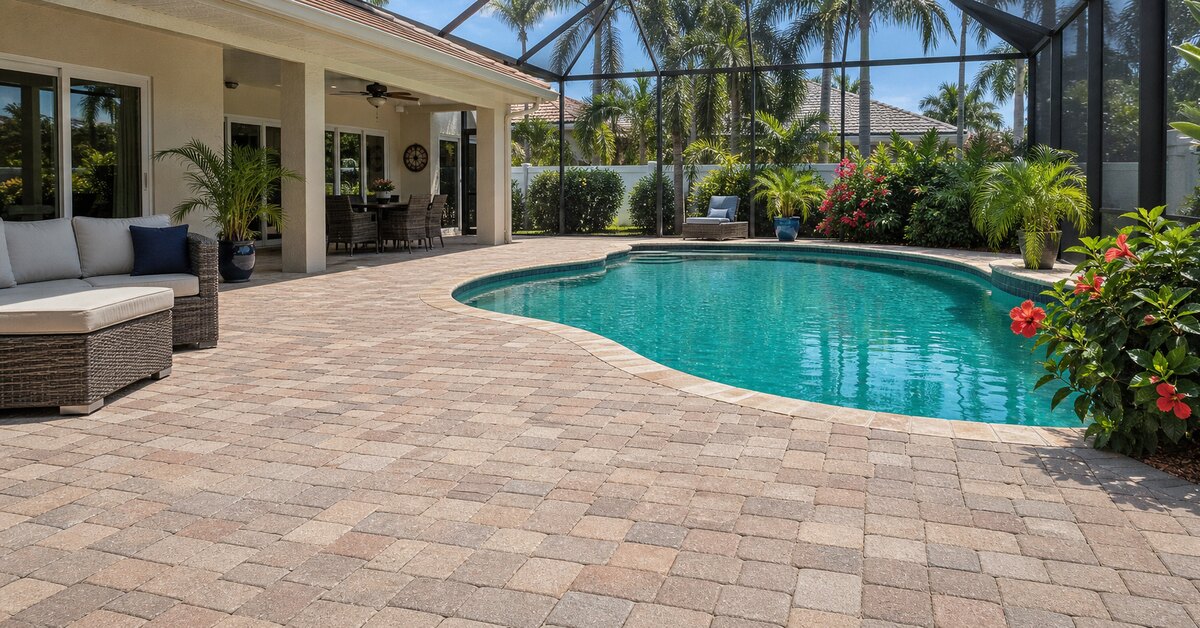
One low paver beside a pool can feel minor until a bare foot catches the edge. Uneven pavers also collect water, loosen neighboring joints, and turn a small settlement area into a wider problem. Professional paver repair in St. Petersburg should do more than make the surface look flat for a few weeks. It should identify why the area moved and rebuild the support underneath it.
Pool decks, driveways, patios, and walkways all settle differently. Salt air is not usually the direct culprit; water movement, disturbed base, irrigation, drainage, roots, and edge failure are more useful places to investigate. The right repair starts below the visible paver.
Why Pavers Sink, Rock, or Spread Apart
Interlocking pavers depend on a compacted base, a consistent bedding layer, supported edges, and filled joints. When one part of that system changes, the surface telegraphs the problem. Around St. Petersburg pools, the most common patterns include:
- Localized settlement: the base was not compacted evenly or has compressed over time.
- Washout: water moving near a drain, downspout, leak, or deck edge carries fine material away.
- Failed edge restraint: outside rows spread, rotate, or drop when the perimeter loses support.
- Root pressure: nearby palms or trees can lift sections while adjacent areas remain low.
- Missing joint sand: open joints allow more movement and let water enter the system faster.
- Utility or plumbing work: previously opened areas may settle if the base was not rebuilt correctly.
Our professional paver repair and restoration work begins with the movement pattern, not a bag of sand. If water is feeding the problem, lifting the pavers without correcting that path is a temporary cosmetic reset.
Pool Deck Repairs Need Extra Attention
A pool deck has more transitions than a typical patio. Pavers meet coping, drains, enclosure footings, equipment pads, door thresholds, and sometimes multiple additions built at different times. Each transition can become a high point, low point, or weak edge.
Standing water near the pool is more than an appearance issue. It can support algae growth and create a slick surface. A low area near a screen door can also send water toward the home instead of away from it. In our St. Petersburg paver service area, afternoon downpours make those drainage clues easy to see.
Pool coping deserves separate judgment. Loose coping and sinking deck pavers can occur together, but they are not always the same repair. The contractor should protect the pool shell, drains, cage posts, and finished edges while determining which materials can be reused.
What a Lasting Lift-and-Reset Repair Includes
- Map the affected area. Mark rocking units, trip edges, low spots, open joints, and drainage paths.
- Remove pavers carefully. Reusable pavers are lifted without chipping surrounding units or pool coping.
- Inspect the base. Soft, missing, or washed-out material is removed so the cause is visible.
- Correct the support. Suitable base and bedding material are placed and compacted in controlled lifts.
- Reset elevations. Pavers are installed to meet neighboring surfaces and direct water appropriately.
- Rebuild edges and joints. Failed restraints are corrected and compatible joint sand is installed.
- Test the finished area. The repair is checked for rocking, abrupt transitions, and drainage behavior.
Cleaning often follows repair because lifted pavers and fresh joint work can leave the surrounding surface uneven in appearance. Our pressure washing services are adjusted to the paver condition so the cleaning step does not undo the repair by blasting out new joints.
Why Sealer Is Not a Structural Fix
Sealer can enhance color, protect prepared pavers, and help stabilize the right joint-sand system. It cannot fill a void under a paver, correct a failed edge, redirect water, or flatten a trip hazard. Applying it before repair can also make later lift-and-reset work more difficult because replacement units may not match the coated field.
The better order is inspect, repair, clean, allow the surface to dry, replace joint sand as specified, and then seal if appropriate. Our guide to paver sealing before Pinellas County rainy season explains the moisture and weather checks that come after the surface is stable.
Focused Repair or Larger Rebuild?
| Condition | Likely Direction |
|---|---|
| A few low or rocking pavers | Localized lift and reset after checking the base |
| One spreading outside edge | Edge-restraint repair plus resetting adjacent rows |
| Repeated settlement along a drain | Drainage investigation and a wider base correction |
| Movement across most of the surface | Broader evaluation of base, grade, and installation |
| Many broken or unavailable pavers | Repair with planned substitutions or partial replacement |
A credible quote should explain the repair boundary and what happens if the opened area reveals more damage. Paver repair cost is shaped by access, total lift area, base depth, paver availability, edge work, and drainage corrections. A pool deck behind a narrow side gate is not the same job as an open driveway with the same square footage.
Small Warning Signs Worth Acting On
Call for an inspection when you notice a new trip edge, a paver that clicks underfoot, sand repeatedly washing into the pool, a puddle that remains after surrounding surfaces dry, or an edge row opening away from the field. Early focused repairs usually preserve more existing material.
Keep irrigation heads from spraying directly onto joints and watch where roof runoff lands. In Clearwater and other parts of Pinellas County, sandy soil and intense rain can reveal weak support quickly. See our Clearwater paver services and broader Pinellas County service coverage for the communities we serve.
Check the Repair After the Next Hard Rain
A completed repair should be reviewed in real conditions. After the next downpour, look for water lingering at the repaired edge, fresh sand collecting near a drain, or a transition that feels abrupt underfoot. A brief puddle while rain is falling is different from water that remains after adjacent areas clear. Take a photo if something changes; the drainage pattern is often easier to diagnose with a timestamp than from a dry deck days later.
Routine observation also helps separate a repaired area from a new issue elsewhere. Pavers can perform well for years and then move after a plumbing repair, landscape installation, or repeated discharge from a redirected downspout. Catching that change early keeps the next repair focused.
Repair the Cause, Then Finish the Surface
A flat surface is the visible result. Stable support, controlled water, sound edges, and filled joints are what make the result last. Once those pieces are right, cleaning and sealing can protect the repaired field and bring the appearance back together.
All Around Tampa Paver Services has specialized in paver restoration since 2012. Read more about our owner-led paver team, then call or text (727) 594-7202 or request an in-person estimate. We will inspect the movement, explain the repair scope, and give you a clear next step.
Frequently Asked Questions
What causes pavers to sink around a pool in St. Petersburg?
Common causes include base settlement, washout near drains, leaking plumbing or irrigation, failed edge restraints, and disturbed soil. The repair should address the cause, not only lift the visible low spot.
Can individual sunken pavers be repaired without replacing the whole deck?
Often, yes. If the pavers are reusable and the problem is localized, the affected area can be lifted, the base rebuilt, and the pavers reset. Widespread base or drainage failure may require a larger repair plan.
Does paver sealer fix loose or uneven pavers?
No. Sealer can protect a properly prepared surface and may help stabilize compatible joint sand, but it cannot rebuild a failed base, correct grade, or remove a trip hazard.
What affects paver repair cost?
The repair area, access, paver availability, base damage, drainage corrections, edge work, root or plumbing issues, and the amount of lift-and-reset labor all affect cost. An in-person inspection is the most reliable way to scope it.