
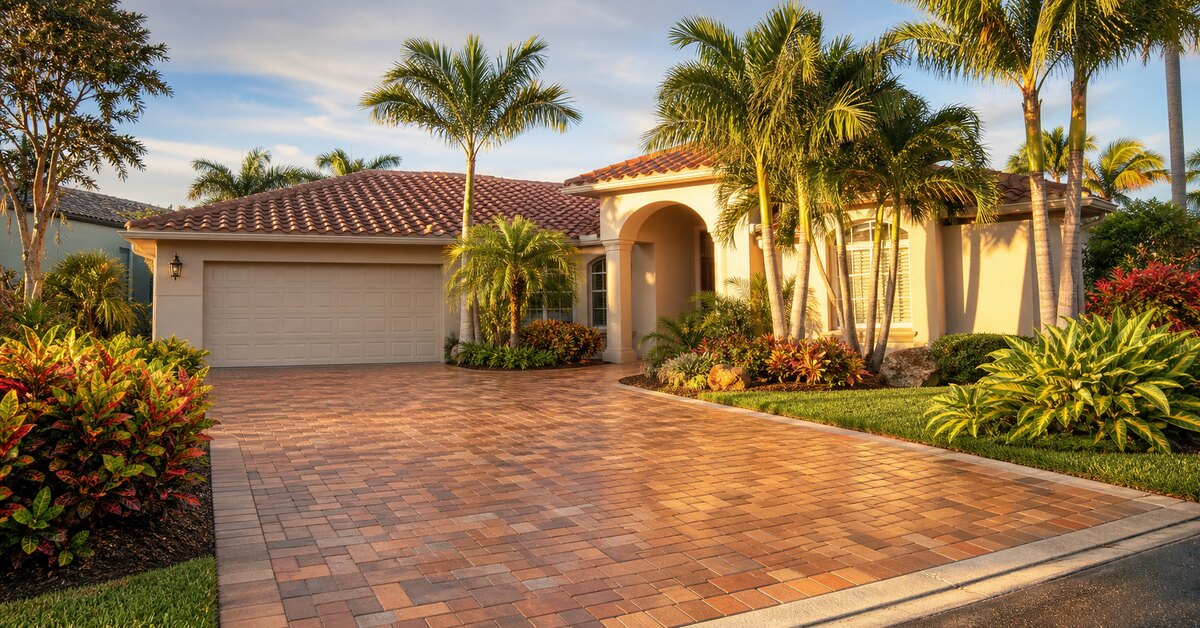
Florida pavers work hard. A driveway in St. Petersburg may absorb full sun all morning, catch an irrigation cycle at noon, and take a hard summer downpour before dinner. Proper paver sealing helps protect the color and joint system, but only when cleaning, repairs, weather, and product choice line up. Sealing over a problem simply makes the problem shinier.
The goal before rainy season is not to beat a date on the calendar. It is to create a clean, stable, dry surface and give the sealer enough time to cure. Homeowners across St. Petersburg, Clearwater, and the surrounding Pinellas communities can use the steps below to decide whether their pavers are ready.
Why Late Spring Changes the Paver Sealing Plan
The National Weather Service says West Central Florida typically enters rainy season in late May, with rainfall coverage increasing quickly in June and peaking from July into early September. That does not make summer sealing impossible. It does make short weather windows, afternoon humidity, and surface moisture much more important.
A professional plan accounts for more than the chance of rain shown in a phone app. Shade, morning dew, irrigation overspray, joint depth, paver porosity, and drainage can keep one section damp long after another section looks dry. Our paver sealing, repair, and restoration services begin with an in-person look because those conditions change from property to property.
Inspect the Surface Before You Choose a Sealer
Walk the entire driveway, patio, walkway, or pool deck after a normal rain. Look at where water sits, how the joints behave, and whether the edges remain supported. The most useful warning signs are usually easy to spot:
- Low or rocking pavers: settlement needs repair before sealer is applied.
- Missing joint sand: open joints allow movement and give weeds and insects room to work.
- White haze or blotchy film: old coating failure, trapped moisture, or efflorescence may require restoration rather than another coat.
- Dark organic staining: algae and mildew need appropriate cleaning, especially in shaded or irrigated areas.
- Poor drainage: repeated puddles point to grading, settlement, or discharge issues that sealer cannot fix.
If the field is uneven or the pool deck has developed a lip, read our guide to repairing uneven pavers and pool decks before deciding on a finish. Correcting the base first gives cleaning, sanding, and sealing a much better foundation.
Cleaning, Repair, Sanding, and Sealing Are Different Jobs
These steps are often sold as one package, but each solves a different problem. Cleaning removes soil, organic growth, and surface residue. Repair resets pavers and corrects isolated base or edge failures. Joint sand supports the interlock between units. Sealer protects the prepared surface and can help stabilize compatible joint sand.
Skipping the sequence creates common failures. Aggressive washing can remove too much joint material. Sand placed on a damp surface can stick to the paver faces. Sealer applied before the surface dries can turn cloudy or bond unevenly. For a better understanding of surface preparation, see how our professional pressure washing process is matched to pavers, concrete, enclosures, and other exterior materials.
Choose the Finish for the Paver, Not the Photo
Homeowners often start with one question: natural look or wet look? Appearance matters, but the existing paver, previous coating, sun exposure, moisture movement, and desired maintenance level matter more. A glossy finish that looks sharp in a sample can be a poor match for a shaded pool deck or a surface with an incompatible old coating.
| Decision | What to Consider |
|---|---|
| Color enhancement | How much richer or darker you want the pavers to appear |
| Sheen | Natural, satin, or glossy appearance and the surface location |
| Breathability | Moisture movement through the paver and base in humid conditions |
| Compatibility | The paver material and any coating that remains from prior work |
The right answer comes from a test area and a clear discussion of tradeoffs. At All Around Tampa Paver Services, pavers are our specialty rather than an add-on. You can see the owner-led approach behind our work on the All Around Tampa team page.
What a Rain-Ready Professional Process Looks Like
- Inspect in person. Confirm the paver type, old coating condition, drainage, repair needs, and access.
- Clean for the actual contamination. Organic growth, oil, rust, and failed coating do not all respond to the same treatment.
- Complete repairs. Reset low or loose pavers and correct failed edges before finish work begins.
- Allow real drying time. Surface color is not a moisture meter. Joints and shaded areas need attention.
- Replace joint sand as specified. Sand should be compatible with the paver system and sealer.
- Apply in suitable conditions. Follow product coverage, temperature, moisture, and cure requirements.
- Protect the cure. Keep traffic, irrigation, furniture, and rain off the surface for the required period.
Homes closer to the coast, shaded properties, and heavily irrigated landscapes may need a different plan than an open driveway inland. Our St. Petersburg paver service area and Clearwater paver service area pages explain how we approach these local properties.
Avoid the Shortcuts That Fail Fast
Watch for one-size-fits-all quotes, sealing immediately after washing, coating over uneven areas, and promises based only on square footage. Paver sealing cost depends on preparation. A clean, stable driveway with compatible sealer is a different job from a cloudy pool deck that needs stripping, repairs, and detailed joint work.
Also avoid treating pressure washing as harmless. Excessive pressure can scar surfaces and blow out joints. During Pinellas County water restrictions, pressure washing in preparation for sealing is allowed, but responsible water use and runoff control still matter. Our summer guide to pressure washing services for Pinellas County homes covers surface protection and local runoff considerations in more detail.
Keep the Finished Surface Working
After sealing, keep irrigation heads aimed away from hardscape, remove leaves before tannins stain, address oil promptly, and avoid harsh chemical experiments. Do not assume every faded spot needs another coat. Sometimes the correct maintenance is cleaning; sometimes it is repair or restoration.
If your pavers are fading, losing sand, settling, or showing a cloudy old finish, request an in-person evaluation. Call or text (727) 594-7202 or use the estimate request form. We will look at the full surface and recommend the next step that fits the property, not just the next product in the truck.
Frequently Asked Questions
When is the best time for paver sealing in St. Petersburg?
The best time is a dry weather window after the pavers have been cleaned, repaired, and allowed to dry fully. In late spring and summer, scheduling around afternoon storms matters more than choosing a particular month.
Can pavers be sealed during Florida rainy season?
Yes, but the surface and joints need enough dry time before application and the sealer needs the manufacturer-required cure time before rain. A professional should confirm the forecast and actual moisture conditions, not just the calendar.
Should uneven pavers be repaired before sealing?
Yes. Sealer does not correct settlement, drainage problems, loose edge restraints, or trip hazards. Complete the needed paver repair first so the finished surface is stable and drains correctly.
How often should brick pavers be resealed in Pinellas County?
There is no universal interval. Sun exposure, traffic, irrigation, drainage, previous products, and the sealer system all affect service life. Have the surface evaluated when color fades, joints lose sand, or water stops behaving as expected.