
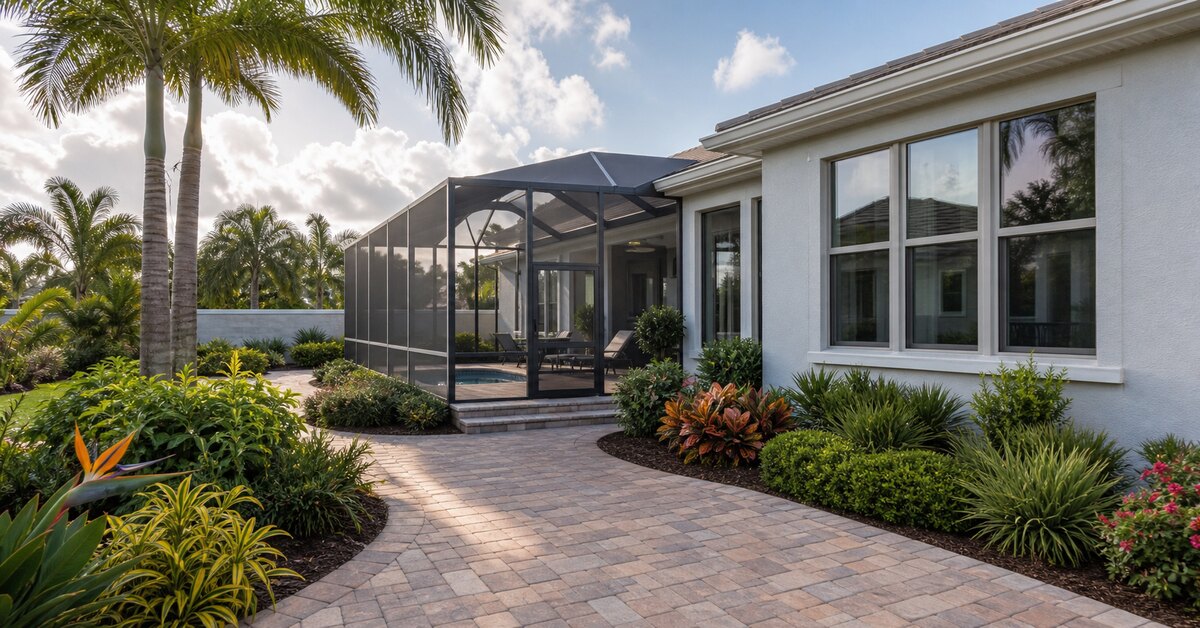
July is when outdoor surfaces in Pinellas County start telling the truth. Afternoon storms leave moisture in shaded joints, irrigation keeps one wall damp, and warm weather helps algae and mildew return quickly. Professional pressure washing services can reset the property, but the best result comes from matching the method to each surface rather than turning up the pressure everywhere.
A paver driveway, painted stucco wall, vinyl fence, pool enclosure, and screened deck are five different cleaning jobs. The equipment may look similar from the curb. The pressure, chemistry, dwell time, water control, and finishing details should not.
Florida Summer Grime Is More Than Dirt
The National Weather Service identifies July through early September as the peak of West Central Florida rainy season. Frequent rain, high humidity, shade, and warm surfaces create favorable conditions for organic growth. Tire residue, irrigation minerals, leaf tannins, rust, and airborne soil add different stains on top.
That is why a good inspection identifies the material and contamination before cleaning begins. Our Pinellas County pressure washing services cover driveways, pool decks, pool enclosures, gutters, walkways, and fences with methods selected for the actual surface.
Pressure Washing and Soft Washing Are Not Interchangeable
Pressure washing uses controlled water force to remove bonded soil from durable surfaces. Soft washing relies more on appropriate cleaners and low-pressure rinsing for materials that can be damaged by aggressive force. A professional may use both methods on the same property.
| Surface | Cleaning Priority |
|---|---|
| Brick pavers | Protect the paver face, joints, edges, and any existing sealer |
| Concrete driveway | Even passes and suitable treatment without wand marks |
| Painted stucco | Lower pressure, controlled cleaners, and careful rinsing |
| Pool enclosure | Protect screens, fasteners, frames, furniture, and pool water |
| Vinyl fence | Remove organic growth without forcing water behind panels |
For siding, soffits, fascia, and other building surfaces, our exterior cleaning and house washing service uses a surface-specific approach instead of treating the home like flat concrete.
Paver Cleaning Requires Restraint
Interlocking pavers are durable, but their joint system can be disturbed. Excessive pressure, a narrow tip, or cleaning too close to the surface can remove sand, etch the paver face, expose aggregate, and leave visible stripes. Old sealer can also react unpredictably if it is already failing.
Before washing, check for loose edges, rocking units, settlement, open joints, and cloudy coating. Cleaning will not correct those conditions. Our guide to paver repair for uneven pool decks and walkways explains which warning signs belong ahead of washing.
If the surface will be sealed after cleaning, the project needs a coordinated sequence and dry-time plan. See our rainy-season paver sealing guide for preparation, sanding, moisture, and cure considerations.
Responsible Runoff Is Part of the Job
Pinellas County explains that storm drains carry runoff to local creeks, lakes, Tampa Bay, and Gulf waters without sanitary-sewer treatment. County guidance says contaminated wash water, detergents, oils, sediment, and other pollutants must not enter streets, gutters, storm drains, or waterways.
Professional planning should identify nearby drains, control wash water, protect landscaping, and collect or direct residue appropriately for the site. Pressure washing in preparation for painting and sealing is allowed under the county restrictions in effect during 2026, but waste-control requirements still apply. Homeowners should also verify current rules with their water supplier because restrictions can change.
What Determines Pressure Washing Cost?
Square footage matters, but it is not the whole quote. The same 1,000 square feet can involve an open concrete drive, a screened pool deck with furniture and drains, or sealed pavers with failing coating. Each requires different labor and risk controls.
- Surface material and current condition
- Type and severity of staining or organic growth
- Access, height, gates, enclosures, and obstacles
- Protection needed for plants, paint, glass, screens, and pool water
- Runoff and residue-control requirements
- Whether joint sand, paver repair, or sealing follows
- Bundled areas such as driveway, walkways, patio, and enclosure
A phone price based only on an estimated area can miss the conditions that affect both cost and outcome. All Around Tampa provides in-person quotes so the scope is clear before work starts. Learn more about our locally owned company and paver specialization on the All Around Tampa story page.
Why DIY Cleaning Often Leaves Stripes
Visible wand marks usually come from uneven distance, speed, overlap, or tip angle. One pass cuts deeper while the next barely lifts the soil, creating light and dark bands that become more obvious after drying. A surface cleaner can improve consistency on suitable flatwork, but it does not replace correct pretreatment, edge work, rinsing, or judgment around cracks and joints.
More pressure is not the cure. It may brighten one strip while permanently etching the material around it. Professional cleaning uses the least aggressive effective method, tests a controlled area, and treats stains according to their source. Rust, oil, algae, leaf tannins, and irrigation deposits need different responses.
How to Prepare Your Property
- Close windows and doors. Check weather stripping and note any known leaks.
- Move fragile items. Bring in cushions, decorations, small planters, and loose toys.
- Identify sensitive areas. Point out outlets, cameras, damaged screens, loose paint, and pool equipment.
- Clear access. Move vehicles and unlock gates before the scheduled arrival.
- Discuss drainage. Show where water tends to collect and where nearby storm drains sit.
- Plan the finish. If paver sanding or sealing follows, confirm traffic and irrigation restrictions.
Properties in St. Petersburg can have tight side access and dense tropical beds, while larger Clearwater lots may have longer drives and more open drainage paths. Our St. Petersburg service page and Clearwater service page outline the local areas we cover.
Keep Surfaces Cleaner Between Visits
Trim plants that hold moisture against walls and screens, aim irrigation away from hardscape, sweep leaves before they release tannins, and address automotive drips promptly. Rinse loose coastal dust from appropriate surfaces before it bonds with organic growth. These small habits will not replace periodic deep cleaning, but they can slow staining and make the next service less intensive.
Avoid mixing household chemicals or applying bleach near landscaping and pool water without a controlled plan. Also avoid sealing a dirty or damp paver surface just to hide discoloration. The condition underneath still matters.
When It Is Time to Call a Professional
Consider professional cleaning when the surface is slick, organic growth returns quickly, stains require more than a rinse, the pavers have an unknown coating, or the property includes several materials that need different methods. DIY machines can be useful for limited tasks, but inconsistent force and improvised chemicals can turn a maintenance project into repair work.
The best summer cleaning leaves the property fresh without scars, blown-out joints, dead landscaping, or dirty water in the street. If your driveway, pool deck, enclosure, walkway, or home exterior is ready for a reset, call or text (727) 594-7202 or request an in-person estimate. We will inspect the surfaces and build the cleaning plan around the property.
Frequently Asked Questions
How often should a St. Petersburg home be pressure washed?
There is no fixed schedule for every property. Shade, irrigation, tree cover, traffic, salt exposure, and surface type all change the need. Clean when organic growth or soil begins affecting appearance or traction, using the correct method for each material.
Is pressure washing safe for brick pavers?
It can be when pressure, tips, distance, cleaners, and runoff are controlled. Excessive pressure can scar pavers or remove too much joint sand, so paver condition should be inspected before cleaning.
Can pressure washing remove algae from a pool deck?
Professional cleaning can remove organic growth, but the treatment should match the pool deck material and protect the pool water, enclosure, landscaping, joints, and runoff path.
What affects pressure washing cost in Pinellas County?
Surface area, material, contamination, access, water availability, protection needs, runoff control, height, and bundled areas all affect the quote. An in-person estimate is more reliable than pricing from square footage alone.