
Plan on at least 24 hours without rain after sealing pavers, and check the product label, because some sealers need less and some need more. In Florida, heat and humidity change the timing. Rain that hits sealer before it sets can leave it cloudy, white, or blotchy, and sometimes it has to be redone.
How long does paver sealer take to dry in Florida's heat and humidity?
There is no single number, because it depends on the product, the temperature, the humidity, and how much sealer went on. Water-based and solvent-based sealers behave differently, and the label will give a minimum dry time before rain and before traffic. Follow the label over any rule of thumb you read online, including this one.
Florida adds two wrinkles. Strong midday sun can dry the surface of the sealer quickly, which can make it feel done when it is not. On the other hand, high humidity, cooler winter mornings, and heavy dew slow the cure. A coat that would be ready in a few hours on a dry, breezy day can stay vulnerable much longer on a muggy one.
The safest approach is to count dry time from when the last coat went on, not from when the pavers first felt dry, and to leave yourself a cushion on the forecast.
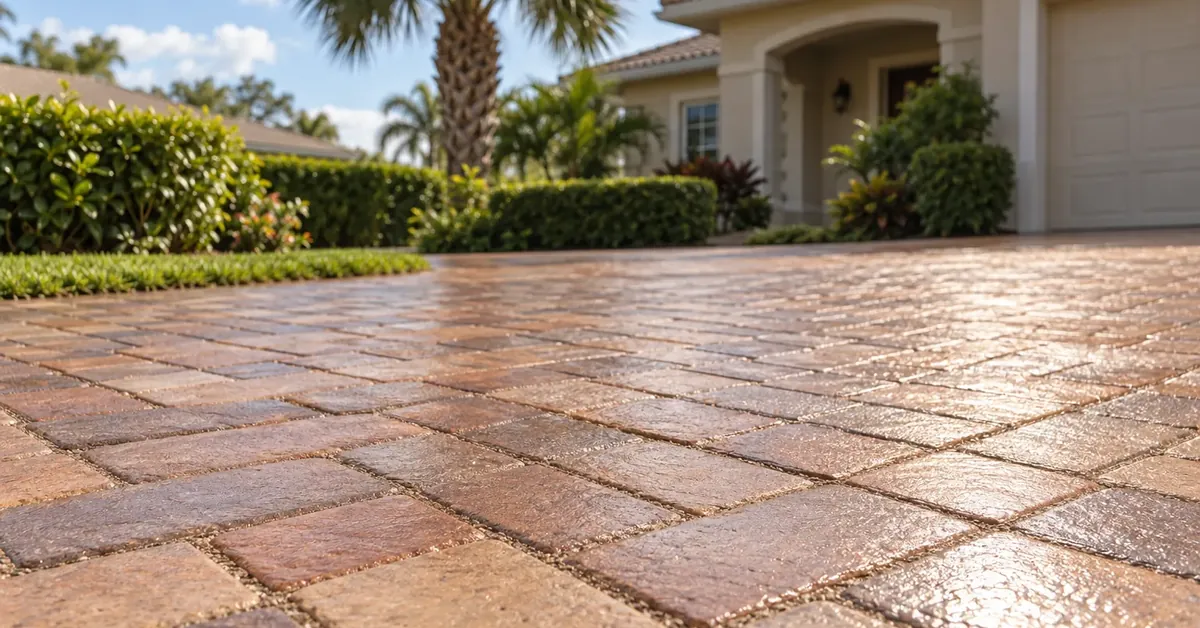
What is the difference between dry to the touch, foot traffic, and fully cured?
These are three separate milestones, and mixing them up is where a lot of damage starts.
Dry to the touch
The surface no longer feels wet or tacky. This often happens within hours, but the sealer underneath is still setting. Dry to the touch does not necessarily mean rain-ready, so follow the product label's rain-exposure instructions.
Safe for foot traffic
Most products allow light walking after roughly a day, but the label rules. Even then, keep pets, wet shoes, and dragged furniture off the surface. Footprints and scuffs show up in a soft film more than people expect.
Fully cured
This is when the sealer has hardened to its full strength. It usually takes several days, and vehicles, patio furniture, and heavy pool-deck use should wait until then. Parking on sealer that has not cured can leave tire marks or lift the film, especially in hot weather when it is softer.
What happens if it rains on freshly sealed pavers?
It depends on how far along the sealer is and how hard it rains. A light sprinkle on sealer that is almost set may do nothing visible. A downpour on sealer that is still wet can cause real problems:
- Whitening or cloudiness. Water gets trapped in or mixed into the film as it sets, and the sealer turns milky or hazy.
- Blotchy sheen. Some areas cure glossy and others look flat or patchy, especially where water pooled.
- Water spots and streaks. Drops leave marks in the film that can stay once it hardens.
- Weak adhesion. Sealer disturbed by water may not bond well, which can lead to peeling or early wear.
Fresh joint sand can also wash out if heavy rain arrives before it has had time to set, which leaves low joints and a messy edge.
How can you tell if rain damaged the sealer?
Look at the pavers once they are fully dry, in daylight, from a low angle. Damage that is hard to see at noon often shows up in the evening light.
- A white, milky, or foggy haze over the color of the pavers.
- Patches where the finish looks different from the rest of the area.
- Raised spots, bubbles, or a rough texture.
- Streaks that follow the path the water ran.
Cloudiness caused by trapped moisture sometimes clears on its own as the film finishes drying out over a few sunny days. Give it time before you decide anything. If the haze is still there after the pavers and sealer have fully dried, the fix usually involves treating or removing the affected sealer and reapplying, which is not a good DIY experiment on a whole driveway. It is also worth telling the difference between sealer problems and efflorescence, since the two can look alike but need different treatment.
What is the best weather window for sealing pavers in Pinellas County?
Tampa Bay's drier months, roughly fall through spring, give you the most reliable stretches. Summer rainy season is the hardest time, with pop-up afternoon storms that can develop quickly even when the morning looks clear. You can seal in summer, but it takes careful scheduling and a tolerance for rescheduling.
A good window looks like this:
- No rain in the forecast for at least a full day after application, and ideally longer.
- Temperatures within the range printed on the product label, and not too hot, since sealer on very hot pavers can dry too fast and look uneven.
- Low to moderate humidity and some breeze.
- Dry pavers at the start, which means dry joints too, not only dry surfaces.
Winter sealing works in Florida when the days are mild, but cool nights slow the cure, so plan around the label's full dry time. Local forecasts for Pinellas County change fast near the coast, so check the hourly outlook right before you start, not just the day before.
How do you get a dry start and a dry finish when sealing pavers?
Two things decide whether a sealing job looks good: whether the pavers are truly dry going on, and whether they stay dry while the sealer sets. Both are easy to get wrong.
Pavers hold water in the joints and the base, so they can look dry on top and still release moisture later in the day. Humidity in Florida makes this worse, especially after a pressure wash. Sealing over damp pavers is a common cause of the same cloudy, white look that rain causes.
That is why the order of work matters. At All Around Tampa Paver Services, every quote starts with an in-person inspection of the pavers, looking for settling, loose pavers, damaged joints, drainage issues, weeds, efflorescence, and failing sand or sealer. Repairs and joint sand come first, then cleaning and prep, then sealing with professional-grade products chosen for Florida's sun, rain, and humidity. Sealing is the last step, so the weather window gets picked with the whole sequence in mind.
If you are sealing yourself, a few habits help:
- Check the hourly forecast the morning of, and again before you start the final coat.
- Give pavers plenty of time to dry after cleaning, longer in humid weather.
- Apply thin, even coats. Puddled sealer takes longer to set and is more likely to turn white.
- Keep sprinklers off the area, and check that they will not kick on overnight.
- Block off the area for the full time the label requires.
What if rain already hit your sealer?
Do not try to wipe it, rinse it, or add another coat over it right away. Let the area dry fully and look at it in good light. If it still looks off, or you are unsure what kind of sealer is down, a professional can inspect it and tell you whether it needs spot treatment or redoing. If you would like us to take a look at pavers in Pinellas County, you can reach out through our contact page.
Frequently Asked Questions
How long before I can walk on newly sealed pavers?
Many sealers allow light foot traffic after roughly a day, but the product label sets the real number. Keep wet shoes, pets, and dragged furniture off longer, because soft sealer can scuff or show prints before it has fully cured.
Can I park a car on sealed pavers the next day?
Usually not. Vehicles are heavy and tires get hot, so most products need several days to cure before parking. Check the label, and be especially careful in hot Florida weather when sealer stays softer.
Will morning dew or humidity hurt fresh sealer?
It can. Heavy dew settling on a coat that is still soft, or sealing over pavers that have not dried out, can leave a cloudy or uneven finish. Check the label for dry times and give the coat as long as it needs before evening moisture arrives.
Can cloudy or white sealer be fixed after rain?
Sometimes it clears on its own over a few dry, sunny days as trapped moisture leaves the film. If it does not, the affected sealer usually has to be treated or removed and reapplied, which is best left to a professional.
Should pavers be sealed in winter in Florida?
It can work on mild, dry days, and Tampa Bay's drier months are a popular time to seal. Cool nights slow the cure, so stay within the temperature range on the product label and allow the full dry time.